

Becoming “Just a Mom”
The proudest job in Japan that the west can’t quite understand

I’m going to share with you my tips on how I came out of that “girl boss” era of my life but first..there’s a moment I keep coming back to.
I was at the park with my daughter — one of those late autumn afternoons where the ginkgo trees are so aggressively yellow they look fake, like someone turned up the saturation on the whole world. She was running toward the slide, that full-body toddler sprint where it looks like her legs might actually outpace her torso, and she was laughing before she’d even gotten to the fun part.
And I was filming it.
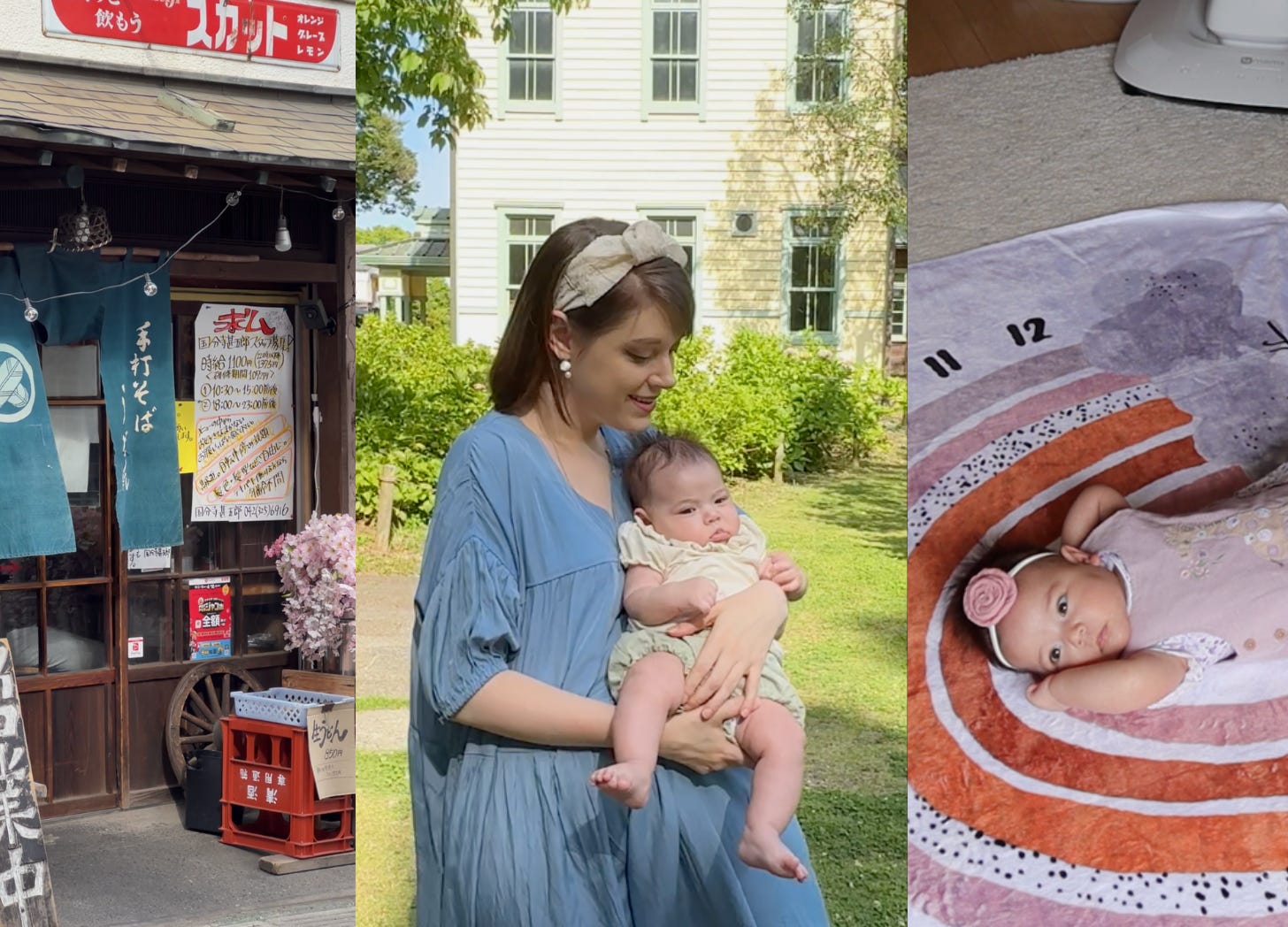
I didn’t film it because I needed it for content — I quit being a full time creator when she was born. It was Just — habit, I guess. The phone was in my hand before I’d made any conscious decision to put it there. My thumb was already hovering over that record button.
I put it down.
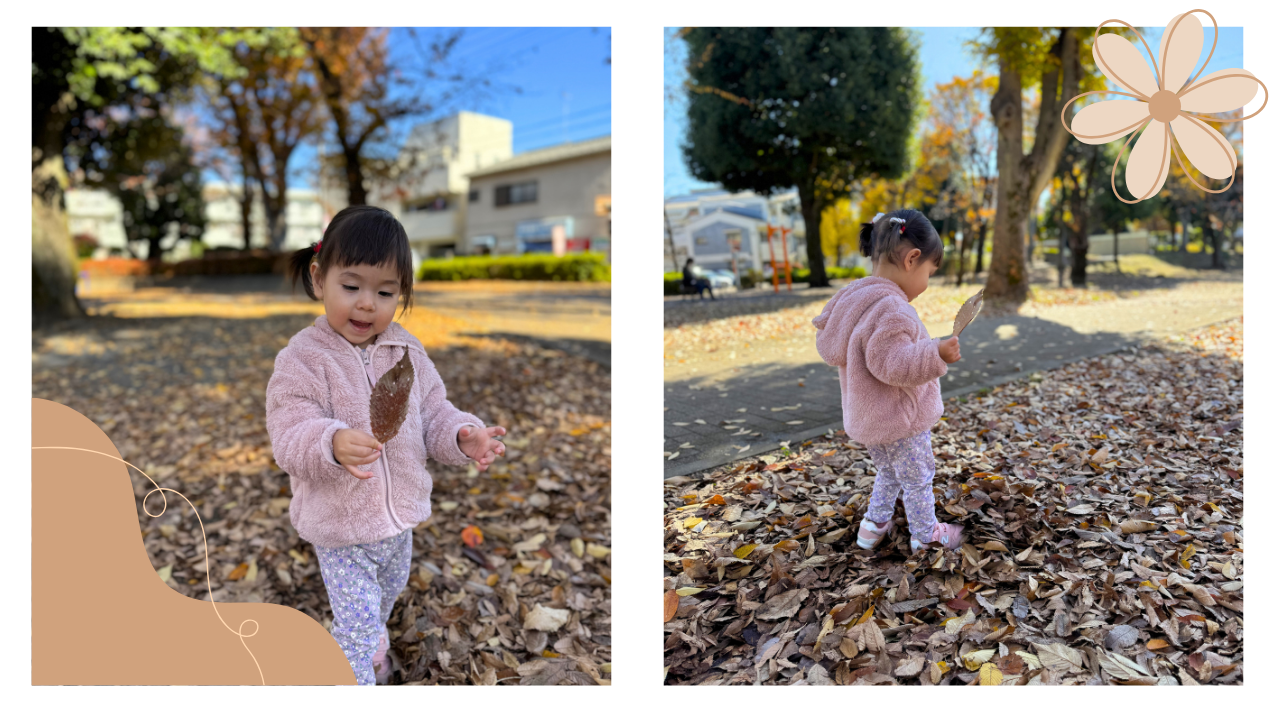
She didn’t notice. She went down the slide twelve more times. She found a stick. She spent a full seven minutes deciding whether the stick was good enough. It was. She carried it home like a trophy.
And I just... watched.
I can’t tell you the last time, before that day, that I had just watched without carrying a lens.

I Used to Know Exactly What I Was Worth
For years, my sense of self was organized around output.
I taught English in Japan — actual classrooms, actual lesson plans, twenty-five faces waiting for me to make grammar interesting. Then I moved online, built a YouTube channel, then Instagram, then courses, then newsletters. At my busiest I was producing content five, six days a week. I had a ring light and a content calendar and a very specific voice I’d refined over hundreds of videos.
I was good at it. I was genuinely proud of it.
But underneath the productivity was something I didn’t examine closely enough: the feeling that making things was what made me a person worth something. That if I wasn’t creating, I was disappearing. The algorithm had colonized my self-worth, and I had let it happen willingly because at least it was measurable. Views, saves, likes, open rates. A number that told me I existed.
When I got pregnant, I told myself I’d figure out how to do both. Everyone does both now, right? There are entire Instagram niches built around doing both.
And then I had her. And the doing-both collapsed almost immediately. It’s not because I couldn’t manage it, but because something in me stubbornly refused.
What Japan Does That the West Doesn’t
Here is something that took me years of living in Japan to really absorb: being a mother here is considered a full vocation.
The Japanese term sengyou shufu (専業主婦) is usually translated as “housewife” or “stay-at-home wife,” and Western ears tend to flinch at it a little. It sounds dated. Diminishing. But that reading misses something important about how it functions here.
Japanese mothers who stay home or are “just mothers” are not staying home instead of having a life. They are managing extraordinarily complex households, raising children inside a culture with deeply specific social expectations, navigating school systems that require extraordinary parental involvement, preparing meals from scratch, maintaining community relationships, handling finances — often functioning as the true center of gravity in the family system.
And they do it with craft. With attention. With a kind of pride that the West has convinced us is embarrassing to feel about domestic work.
I watched it for years before I understood it. The mothers at my daughter’s school who showed up to every seasonal event with bento boxes that looked like small art installations. The way women in my neighborhood greeted each other, asking about each other’s children by name, seemed to have a whole social ecosystem running parallel to the one I was vaguely gesturing toward online. They were deep into motherhood and thriving.
The Identity Crisis Nobody Warned Me About
I want to be honest about this part because I think a lot of us skip over it in the interest of sounding like we’ve figured it out:
The transition was and still is hard.
Not hard like diaper blowouts at 3am hard. Hard like who am I if I’m not producing anything for the world to see.
I had tied so much of my identity to my career — to having a thing I was known for, to showing up in people’s feeds, to being seen — that when I stepped back from it, I felt weirdly... illegitimate. Like I needed to justify my days. Like I was coming off of a drug…
In Japan, there's a heavily misunderstood concept called ikigai. The West took it and flattened it into this idea that, "your purpose is to succeed in your career and hobbies" when in reality, that's not what it means at all. I could go on and on about this topic, but for now, you can listen to the Hanami podcast episode on the true meaning of ikigai with my native Japanese friend, Saori — founder of Mogami Wellness.

My Western brain was running calculations in the background constantly. What could I be building right now? What am I missing? What will I have to show for this year? What can I contribute to our finances cause I went from making something to nothing.
Japan doesn’t really have that voice. Or if it does, it’s a little more silent. A little more hidden.
There’s a cultural permission here to be in a season — to understand that the season of small children is its own complete thing, not a gap between more important things.
I didn’t have that permission built into me. I had to construct it from scratch. And I had to do it while simultaneously being covered in baby food and completely unsure whether I’d had a thought that was only mine in the last six months.
What I Actually Had to Unlearn to Thrive in This Season of Life
I had to unlearn the idea that presence needs a product.
This was the big one. Every beautiful moment in my life had become raw material for something. A trip to the countryside became a vlog. A quiet morning became a caption. A hard conversation with my husband became a relatable Instagram story. I had genuinely forgotten how to experience things without immediately thinking about how I would translate them.
The unlearning, again, felt like coming off a drug. There was an actual withdrawal period where I’d have a sweet moment with my daughter and feel this phantom itch to document, to frame, to share. And every time I didn’t scratch it, I felt slightly anxious and then, slowly, slightly more like myself.
I had to unlearn urgency.
The content economy runs on a kind of manufactured urgency that is deeply at odds with how small children actually experience time. My daughter is not optimized. She will examine a ladybug for twenty-five minutes. She has opinions about which cup. She needs the song again, the whole song, the same one.
Japan has a concept — ma (間) — that points to the meaningful pause, the intentional empty space between things. My daughter lives in ma. She is basically a walking embodiment of it. And I had spent years training myself to be terrified of it.
Learning to be in the pause with her was the work. Actual work. Harder than any content calendar I ever made.
I had to unlearn the hierarchy that said making money meant I was contributing.
This one is still tender…in fact, this morning I asked my husband, “are you upset I’m no longer working?” My husband has never once made me feel like my contribution is lesser because it doesn’t come with a paycheck. But I had internalized something — from culture, from the creator economy, from years of tying my value to my output — that said staying home was something you settled for.
Japan helped reframe this for me. Not because Japan is a perfect model for gender equality (it very much is not) but because the cultural attitude toward doing something with full commitment and craft is different here. Whatever the role is, you inhabit it completely. The mothers I see doing this work well do it with a kind of focused dignity that I had been too busy to notice.
What I Found on the Other Side of it
Here’s what I want to tell you, if you’re in the middle of it right now:
There is a version of you that knows how to enjoy things again without needing to share them.
She’s in there. She’s just been waiting for you to put the phone down long enough to say hello.
There is also a version of you that can fully commit to the idea of being “just a mom.”
Your career never defined you and having no job doesn’t mean you have no worth in this world.
I started noticing small things I had stopped noticing. The way my daughter smells after a bath, the weight of her when she falls asleep against me. The look on her face when she figures something out, the little private triumph of it.
I started cooking differently. Not for content, just for dinner. And dinner tasted better.
I started walking to places without thinking about how I’d describe the walk.
None of this would make a good reel. But it is, genuinely, the most alive I have felt in years.
But even though I’m telling this to you. I still sit here today, coming off of that drug I took for years and years being a content creator. It’s a healing process and made me realize I need to “let go.” I need to stop the content schedules and create when it feels right, prioritize my health, especially after my father’s death, and be more present…at least for a while.
I find a lot of joy in creating, but I let go of it as a “career” — at least for now — and started creating from passion again. Instead of pursuing a “career,” I started pursuing my own and my family’s health and happiness.
We even thought about growing our family but because I have been so neglectful of my health, I’m just not ready and it’s because of the stress of “doing more” to validate my worth and that is not a way to live.
Life has been a lot better since I’ve slowed down, truly, but there is definitely more healing to do.
For the Mamas in the In-Between
If you’re reading this in a season of transition — closing a chapter of a career or creative life you loved to be more present, feeling the grief of an identity you’re setting down, not sure who you are outside of what you used to make —
Here’s what helped me
Let it be a season, not a surrender. You are not disappearing. You are becoming something. Seasons don’t cancel each other out; they accumulate. The woman who reads to her child at bedtime is not less than the woman who built the thing. She is made partly of the woman who built the thing.
Find the craft in the ordinary. Japan taught me this. There is craft in a bento box packed with attention. In a bedtime routine held with consistency. In the way you handle the tantrums, the boredom, the ten-thousandth reading of the same board book. Craft doesn’t require an audience.
Grieve the identity you’re releasing. You’re allowed to miss it. You’re allowed to miss being seen, being known for something, having a metric that told you how you were doing. That loss is real. Skipping the grief doesn’t make you more grateful; it just makes the ache go underground where it’s harder to find.
Give yourself the time it actually takes. I didn’t feel settled in this for months. Maybe a good year. There was no clean moment where I crossed over from struggling to at peace. It was gradual, and it snuck up on me, and one afternoon at a park with a yellow ginkgo tree I realized I had stopped calculating all the time.
Let your child show you how. My daughter has no idea how to be anywhere other than where she is. She doesn’t multitask. She doesn’t strategize her joy. She finds the best stick and she carries it home, and she’s completely serious about it.
That’s the whole practice, actually. Find the stick. Carry it home. Be completely serious about it.
I still make things. I still write. I still show up here, in this little corner of the internet where the pace is slower and the algorithm doesn’t run things.
But I am not building a brand anymore. I am building a life.
And it turns out — slowly, in the way Japan teaches most of its best lessons — that those two things are not the same.
If this found you in a hard season of transition, I’d love to know. Leave a comment or reply to this email — I read everything, and I mean that. You’re not alone in the in-between.
Enjoyed this essay? Share it with someone who might need to hear it today.

💌 read more slow & thoughtful reflections here
🌸 follow my day-to-day life @itskellymorita on Insta
💌 come say hi in our mom group chat
You might also like:

